
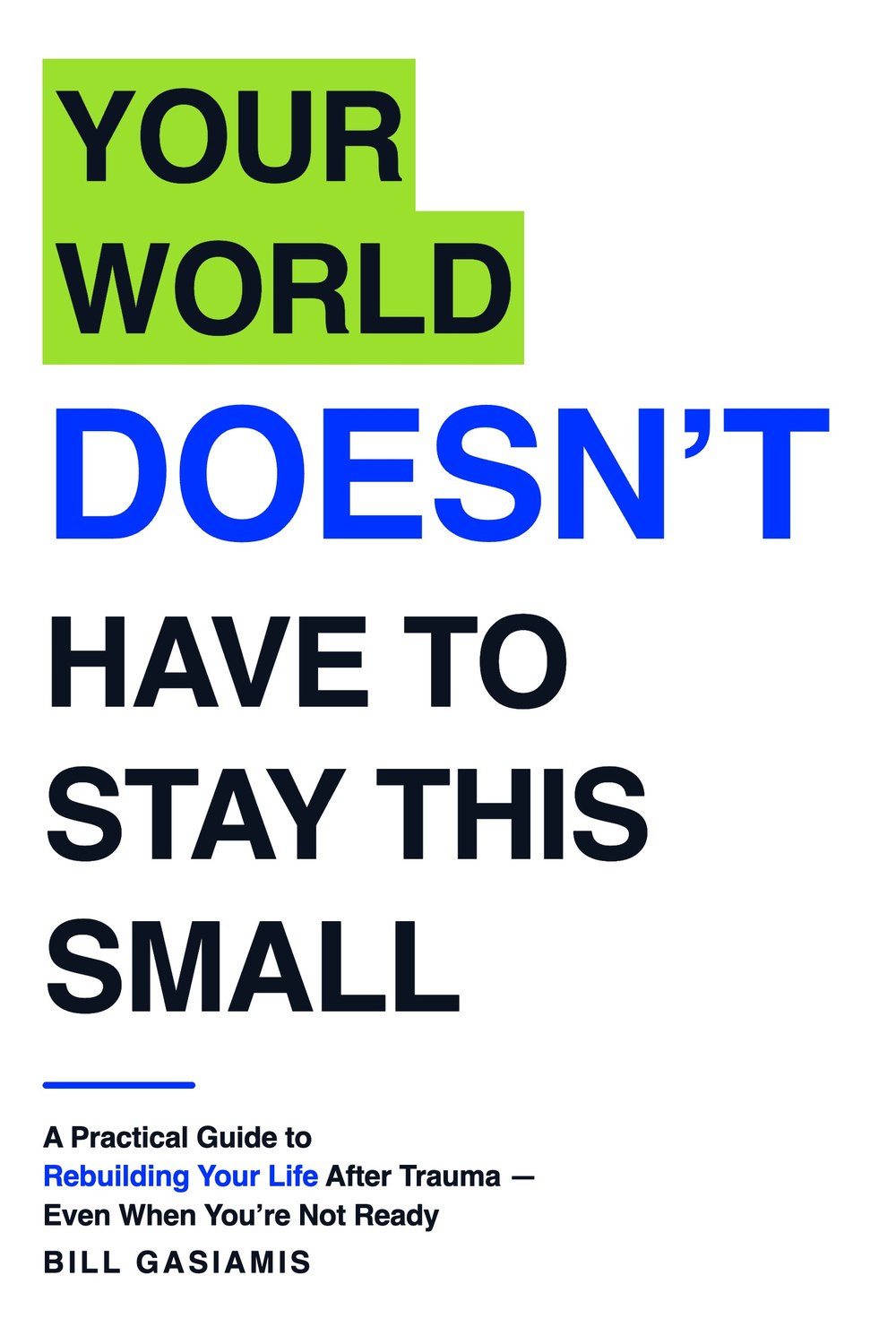
A new book by Bill Gasiamis
Still functioning.
Not really living.
You survived the thing. Everyone says you’re doing well. So why does your life keep getting smaller?
The part nobody warned you about
You already know the exact size of your world
Even if you’ve never said it out loud.
- You say no to things you used to say yes to.
- You plan around your fear, and you call it being sensible.
- You leave early. Or you find a quiet room. Or you don’t go at all.
- You’re more careful, more tired and more alone than you want to be.
- You’ve stopped telling people how you actually are, because “fine” is faster.
- And you’re waiting — for the day you feel ready enough to start living again.
The crisis had a name. The diagnosis had a name. Even the treatment had a name. But this stage — where you’re upright, functioning, and quietly disappearing — didn’t come with one.
That’s the gap this book was written to close.
Ready is not a feeling that arrives. It’s a result that gets built. You don’t wait until you feel ready and then act. You act — badly, tiredly, on a bad day — and that creates evidence. Evidence creates confidence. Confidence creates momentum. That’s the whole mechanism, and it works in the wrong order from the one you’ve been taught.
Who’s writing this
I wrote this from inside it
In February 2012 I was 37 and certain of who I was. Healthy, strong, capable, didn’t rely on anybody. Then a blood vessel in my brain started leaking, and I spent seven days in hospital finding out that none of those boxes were load-bearing.
A month later it happened again. I couldn’t start a sentence and land the ending. I couldn’t type an email. And here’s the strangest part: I looked fine. People kept telling me how great I looked while I was disappearing inside.
My world got small, fast. We’d arrive at a party and leave early — or I’d quietly find the host’s bedroom and sleep while the party carried on at full volume down the hall.
The doctors did their job, and did it well. But nobody had anything for what came after. What I actually needed didn’t seem to exist: a path forward. Proof. Somebody further down the road than me, turning around and saying it leads somewhere.
One morning, kids at school, house quiet, I sat at the kitchen table, opened my laptop and typed: how to reduce inflammation in your brain.
That’s it. That’s the heroic origin story. A search bar.
In November 2014 a third bleed put me into brain surgery. I woke unable to walk. It took a month of inpatient rehabilitation to get home, and seven years before I returned to work in any meaningful sense. But somewhere in those years something had changed: I wasn’t waiting to feel ready anymore. I knew how to take the next step from wherever I was standing.
Watch
Hear it from me
It has a name
Post-traumatic growth
Eventually I started a podcast, partly to find the people I’d needed in 2012 — the ones further down the road. More than 400 interviews later, I can tell you what they have in common. They talk about solutions more than problems. They’re busy helping other people. They’re chasing purpose and meaning.
Most of them have never heard the term for what they’re doing.
I hadn’t either. I’d already finished my first book before I stumbled onto the work of Richard Tedeschi and Lawrence Calhoun, who had been researching this since the 1990s and had given it a name. The relief was enormous. I didn’t have the words. They did.
We have decades of language for what trauma takes from people. We have almost none for what people build afterwards. That’s not because it doesn’t happen — it’s because nobody handed you the vocabulary.
To be clear about what this is not: post-traumatic growth is not being happy the trauma happened. It’s not a silver lining. It’s not gratitude on command, and it is not a way of minimising what you went through.
What’s inside
Twenty chapters. Two halves. One job each.
Every chapter follows the same rhythm: it opens with a moment you’ll recognise, explains what’s actually happening underneath it, then gives you a small plan — something you can do, not just something you can understand.
Part One
Understanding the aftermath
The first eight chapters won’t fix anything. That isn’t their job. Their job is to give you language, clarity, and permission to stop fighting your own experience.
Chapters 1–8
Part Two
Rebuilding on purpose
Twelve chapters of tools you can test, keep and make your own — built for the days when you have almost nothing to work with, not the days when you’re already motivated.
Chapters 9–20
See the full table of contents
Part One — Understanding the Aftermath6
- 1If You Feel Like No One Gets It9
- 2The Secret Wish Nobody Says Out Loud19
- 3“It Wasn’t That Bad”… Until It Was27
- 4Confusion Is a Special Kind of Exhausting41
- 5Forcing Yourself to Be Positive Is the Fastest Way to Feel Alone53
- 6The Day Your Old Rules Stopped Working63
- 7If Your Mind Keeps Replaying It, You’re Not Crazy75
- 8The Question That Changes Everything87
Part Two — Rebuilding on Purpose96
- 9You Don’t Need More Advice — You Need Tools That Work99
- 10The First Time You Notice You’re Not the Same115
- 11The Weird Part About Getting Better125
- 12The Moment You Realise You’re Carrying It Alone135
- 13The Day You Think, “I’m Back at the Start”145
- 14Most People Are Waiting for a Breakthrough That Never Comes155
- 15The Quiet Moment You Realise You’re Not Second Guessing Everything167
- 16The Story You Tell Yourself Becomes the Room You Live In179
- 17The Fastest Way to Ruin Meaning Is to Force It191
- 18The Day You Realise You’ve Been Functioning, But Not Living201
- 19When the Story Stops Dragging You213
- 20You Keep Looking for the Old Life — But It’s Not Coming Back225
Know your opponent
The things keeping you stuck have names
You can’t fight something you can’t name. So each chapter names the specific thing doing the damage — and then takes it apart.
Enemy
Confusion
Makes everything feel urgent and impossible at the same time. It piles your whole life into one heap and says: solve all of it before you move.
Enemy
The Rewind Fantasy
The quiet belief that recovery means getting the old life back. It sounds like hope. It isn’t. When today has to compete with a memory, today always loses.
Enemy
The Suffering Hierarchy
The invisible ranking system that says your pain only counts if it’s worse than someone else’s. It sounds like humility. It’s suppression with good manners.
Enemy
Positivity as Avoidance
A mask can get you through a meeting. Live in it and you lose contact with yourself — and growth can’t happen when you’re disconnected from your own truth.
Plus the Inner Interrogator and the “Screw It” Spiral — and the lies that keep every one of them running.
The lies
You’ve said at least three of these to yourself this month
If I’m not okay yet, I’m doing recovery wrong.
Going back is the goal.
Trauma only counts if it’s big-T trauma.
I need clarity before I take action.
If I’m still hurting, I’m doing it wrong.
If I were stronger, this wouldn’t shake me.
None of them are malicious. They’re lazy lies — the kind that show up when your nervous system is tired and your brain is desperate for certainty. The book takes each one apart and replaces it with something you can actually stand on.
Try it before you buy it
Here’s a real exercise from Chapter 1
Every chapter ends with one of these. Ten minutes, a pen, and a page. Deliberately small, because small is what works on a bad day.
Write this sentence at the top of a page:
“Okay means I can take the next step.”
Then answer these honestly:
- What’s one thing I’m trying to rush?
- What’s one thing I can do today that counts as a next step? (Keep it small. Almost annoyingly small.)
- What would I stop doing if I stopped treating healing like a deadline?
Now pick your next step and do it within 24 hours. Not because it fixes everything. Because it proves something: you’re not trapped.
Straight answers
What this book is not
- It is not therapy, and it doesn’t pretend to be.
- It won’t diagnose you.
- It will not tell you your trauma was secretly a gift.
- It won’t pressure you into finding meaning before you’re ready.
- It is not a motivational speech disguised as self-help.
What it does instead is the thing I’ve always loved doing: take complicated ideas, make them practical, and help you act in a way that actually sticks.
Who it’s for
Your hard thing probably isn’t a stroke
It might be a divorce. A diagnosis. A redundancy. A business that went under. A loss. An assault. A childhood you’re only now naming properly. A phone call that split your life into before and after.
The details matter less than you’d think. I’ve watched this pattern in hundreds of people, and it isn’t neurological. It’s human.
This book is also for the person who loves someone in this stage and has run out of things to say. Reading it will tell you more about what they’re carrying than asking them ever will.
And if you’re currently thinking “yeah, but I don’t think I belong here” — that thought has a whole chapter to itself. You don’t need the worst story to deserve the next step.
One honest caveat
This book draws on established research and gives you tools you can use without a therapist in the room. But it is not a substitute for professional care, and for some people professional support is not optional.
Please treat professional support as a primary resource — not an alternative — if you’re experiencing thoughts of suicide or self-harm, using substances to manage your emotional state, unable to function in daily life for extended periods, seeing no reduction in symptoms after several months, dealing with ongoing abuse or complex grief, or managing a diagnosed condition.
None of that indicates failure. It indicates that the level of support required is higher than a book can provide.
How to use it
The whole plan is three steps
1
Get the book
Paperback or ebook. Whichever one you’ll actually open.
2
Start where you actually are
Read Part One first if you can — it makes Part Two land harder. But if one chapter title describes your week, start there.
3
Do the small thing at the end
Within 24 hours. The smallest version of it. That’s the rule, and it’s the only rule.
If nothing changes
You keep treating healing like a finish line, and you keep failing yourself on the days you need compassion most. You keep performing “fine.” You stop asking for support. You assume you’re behind. And you carry unnecessary shame on top of the pain you’re already working through.
That isn’t strength. That’s extra suffering.
The alternative isn’t a breakthrough. It’s a build — one small piece of evidence at a time, until the next step becomes its own path.
Questions
Before you buy
Is this a stroke book?
No. My own hard thing was three brain haemorrhages, and that’s where my experience comes from — but the book is written for anyone whose life split into before and after. Illness, loss, divorce, redundancy, assault, a long season of chronic stress. The mechanism is the same.
What if my trauma doesn’t “count”?
Trauma is about impact, not competition. Your nervous system doesn’t check the leaderboard before it responds. Chapter 3 is entirely about this, because the belief that you don’t qualify is one of the most reliable ways people stay stuck.
Is this therapy?
No. It can help you understand what’s happening, name it accurately and take structured steps. It cannot provide clinical assessment, relational safety or personalised treatment. It works best alongside a life that includes adequate support.
How long is it, and do I have to read it in order?
Twenty chapters across two parts, around 240 pages. Part One is designed to be read first — it does the groundwork that makes Part Two land. After that, chapters stand on their own.
What formats is it available in?
Paperback and ebook, both on Amazon. Paperback ISBN 978-0-6459191-3-4, ebook ISBN 978-0-6459191-2-7.
I’m supporting someone else. Will this help me?
Yes — it’s one of the reasons the book names things so directly. It gives you accurate language for what the person you love is experiencing, and it explains why the most common forms of encouragement land as pressure.
Your world got small to keep you safe
It doesn’t have to stay that way.
You don’t have to feel okay to take the next step. You just have to take the next step.
About Bill Gasiamis
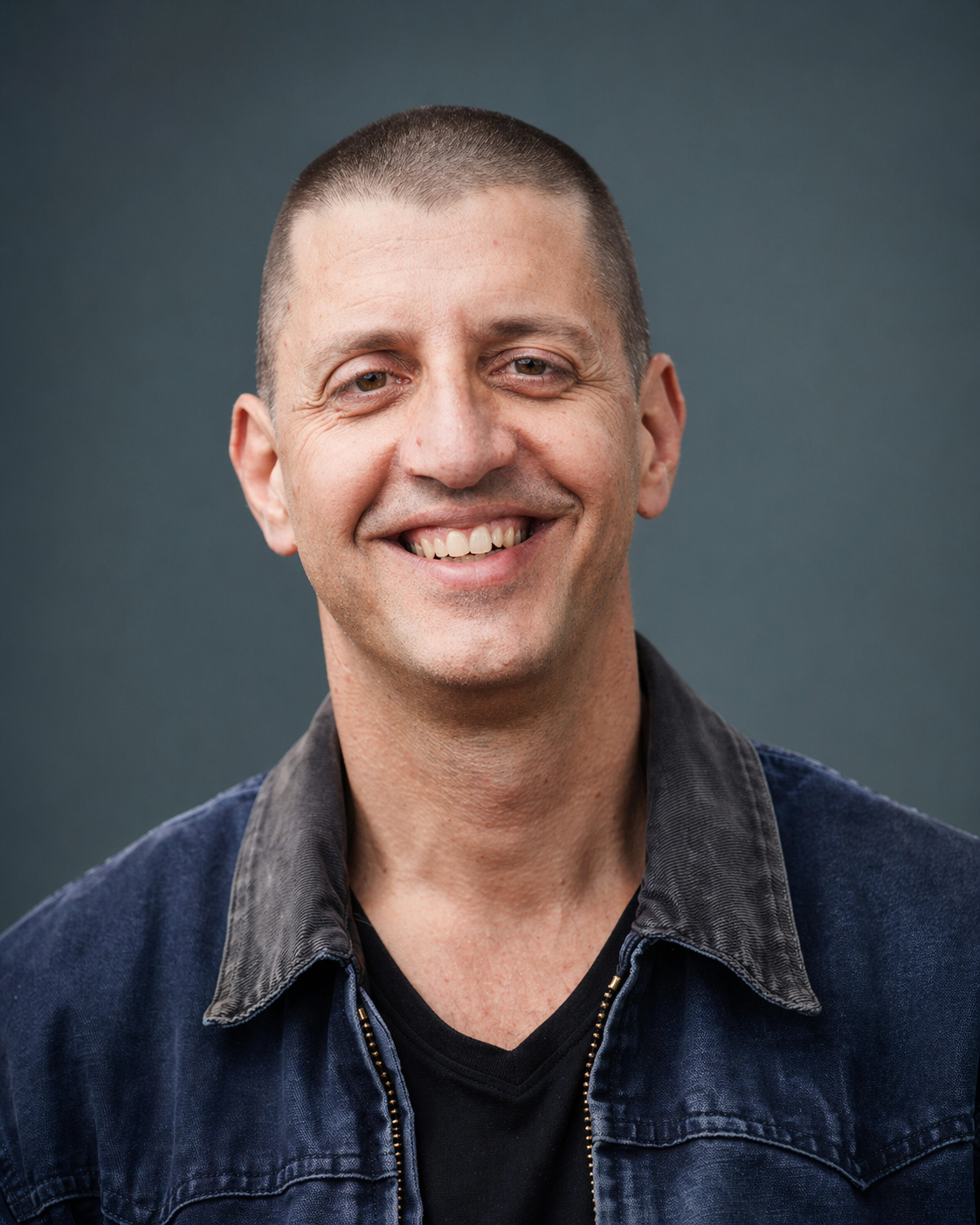
Bill survived three brain haemorrhages and brain surgery between 2012 and 2014. He is the host of the Recovery After Stroke podcast, where he has recorded more than 400 conversations with people rebuilding after life-changing events, and the author of The Unexpected Way That a Stroke Became the Best Thing That Happened. He speaks to teams and organisations about behaviour, culture and what people are actually carrying at work. He lives in Melbourne, Australia.
© 2026 Bill Gasiamis · billgasiamis.com · Contact
If you are in crisis, please contact your local emergency services or a qualified health professional. In Australia, Lifeline is available on 13 11 14.
