


Quick answer: Two NAB employees died by suicide within months of each other despite the bank’s engagement survey scores showing nothing alarming — because survey sentiment and actual leadership behaviour under pressure are two different things surveys aren’t built to catch. The pattern former staff describe (aggressive monitoring, public humiliation, retaliation against anyone who raised concerns) is what happens when leaders default to control instead of accountability under pressure. The fix isn’t a better survey — it’s making leadership behaviour itself visible before it reaches an inquest.
Introduction
Your organisation can score well on an engagement survey and still be destroying people.
That is the uncomfortable reality sitting behind recent reporting on the National Australia Bank, where two employees in separate teams died by suicide within months of each other — while the bank’s internal culture metrics apparently showed nothing alarming. Former staff have since described a workplace that shifted from supportive to intimidating as cost-cutting intensified: aggressive performance monitoring, public humiliation of underperformers, and a “mark for redundancy” response to anyone who raised concerns.
In this article, you will learn:
- What the NAB situation reveals about the gap between survey results and lived culture
- Why performance pressure activates specific behavioural patterns in leaders that surveys cannot detect
- How Gallup’s 2026 global research confirms this is not an isolated failure
- What the data looks like when you measure behaviour rather than sentiment
- What leaders need to do differently before the next inquest finds their name
What Happened at NAB
Reporting by Human Resources Director Australia in April 2026 documented the situation in detail. Two NAB employees — in separate teams, in separate circumstances — died by suicide within months of each other. Former staff and union representatives described an escalating pattern of cultural deterioration: excessive workload targets, supervisors who used public humiliation as a performance tool, and a culture where raising concerns was met with placement on redundancy shortlists rather than support.
The bank has not publicly confirmed all of the specific allegations. But what is significant is the pattern described by multiple former employees: a workplace that looked functional by the numbers, and felt dangerous to the people inside it.
This is not a story about one rogue manager. It is a story about a system that replaced human accountability with metric accountability — and removed the psychological safety required for anyone to say so out loud.

Why a Good Survey Score Is Not Enough
Engagement surveys measure how people feel about their work on the day the survey lands in their inbox. They measure a sentiment, not a behaviour.
They do not measure what a manager says in a one-on-one when no one else is listening. They do not capture the comment in a team meeting that everyone notices but no one names. They do not reflect the quiet calculation an employee makes — “if I raise this, I will be next on the list” — that decides whether harm gets reported or absorbed.
When performance pressure intensifies, leaders default. They default to the behaviours that feel productive, even when those behaviours are harmful: pressure, monitoring, comparison, isolation. This is not malice in most cases. It is unexamined default behaviour — and it is exactly what no survey is designed to surface.
What the Pattern Actually Looks Like
The behavioural pattern described at NAB — and consistently identified in Australian workplace litigation — has several recognisable features.
Leadership avoidance: managers who feel responsible for numbers but not for the people producing them. Control by fear: the use of performance frameworks not as development tools but as threat mechanisms. Institutional silencing: a complaints process that responds to concerns by increasing scrutiny of the person who raised them rather than the conduct they raised it about.
None of these patterns are unusual. They are default responses to pressure in environments where leaders have not developed the self-awareness to catch them.
The Broader Pattern
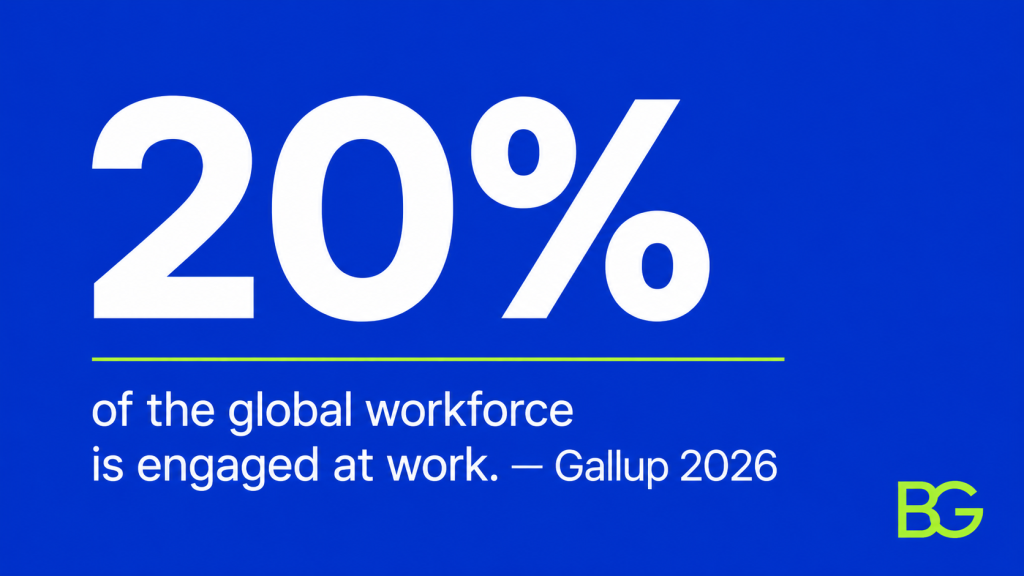
The NAB situation did not happen in isolation. Gallup’s 2026 State of the Global Workplace report found that global employee engagement has fallen to 20% — the lowest since 2020 and the second consecutive year of decline. Manager engagement has collapsed nine points since 2022. The research is unambiguous: the quality of leadership behaviour determines whether people thrive or deteriorate at work.
In Australia and New Zealand, 49% of workers reported experiencing significant daily stress in the past year — nine points above the global average. That is not a workforce issue. That is a leadership culture issue, expressed in data.
What Leaders Need to Understand
Fixing this does not start with a new policy, a revised survey, or a better EAP program. It starts with making behaviour visible.
Most leaders do not know what they are doing to people around them. Not because they are indifferent — but because no one has ever shown them a clear, evidence-based picture of how their specific traits play out under pressure. That is where the conversation about behavioural culture actually begins.
A behavioural psychometric assessment does not tell you whether someone is a “good” or “bad” leader. It tells you which patterns are active, which are being suppressed, and which are most likely to cause harm when the pressure arrives. Understanding those patterns — in yourself, in your leadership team — is the starting point for building a culture that cannot be exposed by an inquest.
For organisations serious about prevention, rather than post-event response, exploring tools like the Entrepleio® behavioural assessment is one concrete step toward making what is invisible finally visible.
Conclusion
The NAB story will not be the last of its kind. As long as organisations measure culture by survey sentiment and manage performance by number alone, the gap between what looks safe and what is safe will remain.
The question is not whether your engagement score is acceptable. The question is: do your leaders know what they are doing to people — specifically, under pressure, in the moments no survey captures?
If you cannot answer that with confidence, that is where the work begins.
Is Your Organisation’s Culture Visible — or Just Measurable?
Bill works with leadership teams to make the behavioural patterns that damage culture visible before they reach the headlines. If the NAB story made you uncomfortable, that discomfort is worth exploring. Let’s start with a conversation.